
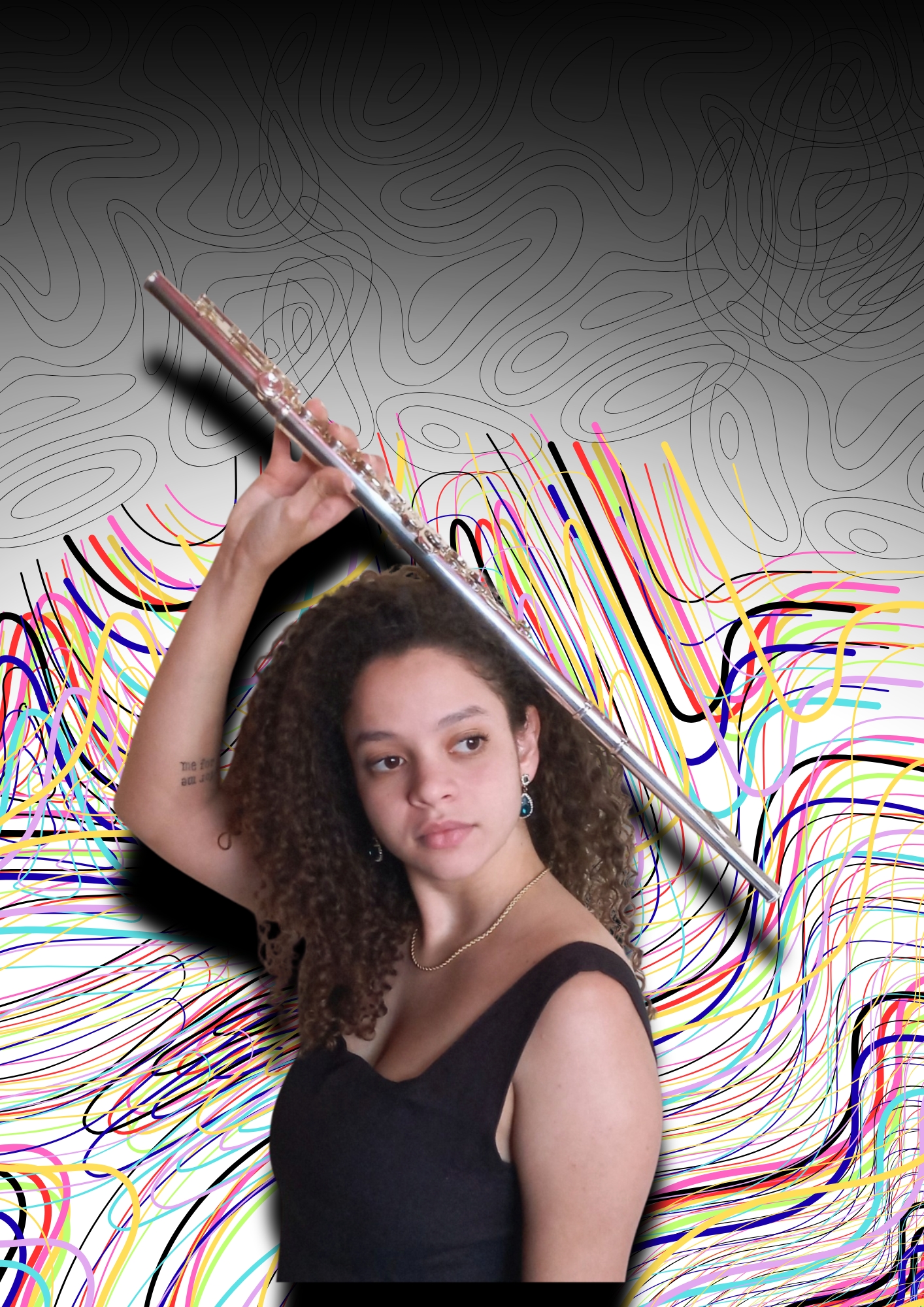
Exploring Brazilian Music
I am from Brasil, from Piracicaba – SP, a small city for Brazil (around 440.835 inhabitants). Even though my city is small it is full of culture and music. I started studying music when I was 12 in the GURI project, which is a project that gives music education to kids (from 08 to 18 years old) that cannot pay for it. They have their own instruments and lesson 2 times a week, with band, orchestra, choir, and instrument group lessons. After that I studied in Maestro Ernst Mahle Music School in Piracicaba, Tatuí Conservatory and University of Sao Paulo. Through my years of study, my focus was classical music, but I was always involved in groups of Choro, Samba, Forró and other Brazilian styles.
In 2019 I got the opportunity of trying for an exchange program called MOVE between Malawi, Brazil, Mozambique and Norway. After a selective process I was approved and could travel to Norway where I studied for 9 months at Trøndertun Folkhøgskole. After this, I fell in love with the country and its people. And decided that one of goals was to study in Norway. I applied at UiA and during the interview I learned more about the school’s program, and its range over music education and careers. Then I was sure that UiA was my place for music studies.
In this project Exploring Brazilian Music I tried to search for a broad repertoire, ranging from popular and folk music to classical music. I also wanted to show some composers and styles that are not so known out of Brazil. For example, I chose Na Gloria, which is a choro, because that is a genre of music that is quite known, but not as much as Bossa-Nova or Samba, even though choro is older than the last two. During the project we also played “One note samba” from Antonio Carlos Jobim, who also composed “Girl from Ipanema”. The idea here was to play a famous composer, but other music that would not be as known. The same idea go for the classical pieces, we played Villa-Lobos but also Patápio Silva and Oswaldo Lacerda, which are also Brazilian classical composers but not as famous as Villa-Lobos.
Another fun thing was playing “Na Glória” – Ary dos Santos and Raul Barroso. For playing choro we usually have a formation with at least Gitar, Pandeiro and a melodic instrument. On our case we had piano, harp and flute, which we decided to play with flute and shakers. The reason for that is that we wanted it to be an interactive moment with the audience. The chorus of Na Glória has few words, which we wanted the audience to sing with us. It was a fun experience for us, who were doing this kind of interaction for the first time, and for the audience, it really became a festive mood, just like in a typical choro setting in Brazil.
In October we had a project with Erasmus Global Mobility together with teachers from Palestine and other students from UiA. We had a concert at Grimstad Kulturhus where we performed a mixed repertoire with music from four different countries, including the participation of one student from the school Kvalifiseringstjenesten.
In this concert the group played “One note Samba” and I guided the group through how we should play it, and played percussion. I also did the media work, the pictures on widescreen behind the stage, which included illustrations representing each country. Also, during that collaboration, I played percussion on the Arabic pieces with the teachers from Palestine at the lunch concert in UiA.
I was also involved in the research group PRISM’s project Sound of History – Concern and Compassion through Music, with musicians, researchers, and students. We then met Kjetil K. Bøhler, who presented his research on how music is used in election campaigns in Brazil. We presented a short repertoire where we included Olha Maria – Chico Buarque, which is a song made during the military occupation in Brazil, during this time musicians the artists had hidden messages in their songs, in this case a song about a goodbye to all that were taken from the military forces. We also played the Choro – Na Glória, with the intention of representing the union between different cultures and traditions, since choro was created from European melodies and the African rhythm Lundu.
At 28 October we also played at Sjølingstad Uldvarefabrik, which was a collaboration with research project “Remembering Witches” which is a study about witches’ history in Norway. With that in mind and with a concert date close to Halloween the idea was to talk about Brazilian folklore. Just like in Norway where kids learn about “trolls” and “nisser”, in Brazil we learn about “Iara, Saci-Perere, Curupira” and others. I wrote down the story about these characters to be told in a storytelling way, with a music that would represent each of them. I also created the scenario that was shown on the projector with pictures and videos of Brazilian fauna and flora and illustrated pictures of each character. For that concert most of the music was from Brazil. We also had a tour in the museum where the curator explained how the machines worked and we played, accompanied by the dancer Silje Nordheim, in a way to represent the beauty of the machine work and the sound reverberation in the room different room of museum. For our last project of the semester “Dialoger med Kunstsilo – et kunsterisk referat” we continued the collaboration with Silje and this time the singer Helga Farestveit was included. We used excerpts of the Brazilian repertoire from the other projects and added pieces to express our feelings of the paintings from Kunstsilo. We visited the museum and took pictures and videos of the objects that we felt had something to do to our repertoire. After that we had a group discussion to decide what would be played and how. We decided to do a “walk in the museum” where we took Kunstsilo into SAL 1 at UiA. I prepared the presentation of the pictures and videos that needed to be part of this walk, so that the audience “followed us” in Kunstsilo.
To summarize my work in this project was a search for repertoire from my own culture and knowledge on Brazilian music. In the visual part of the concerts, creating the presentations to be as a scenario.