
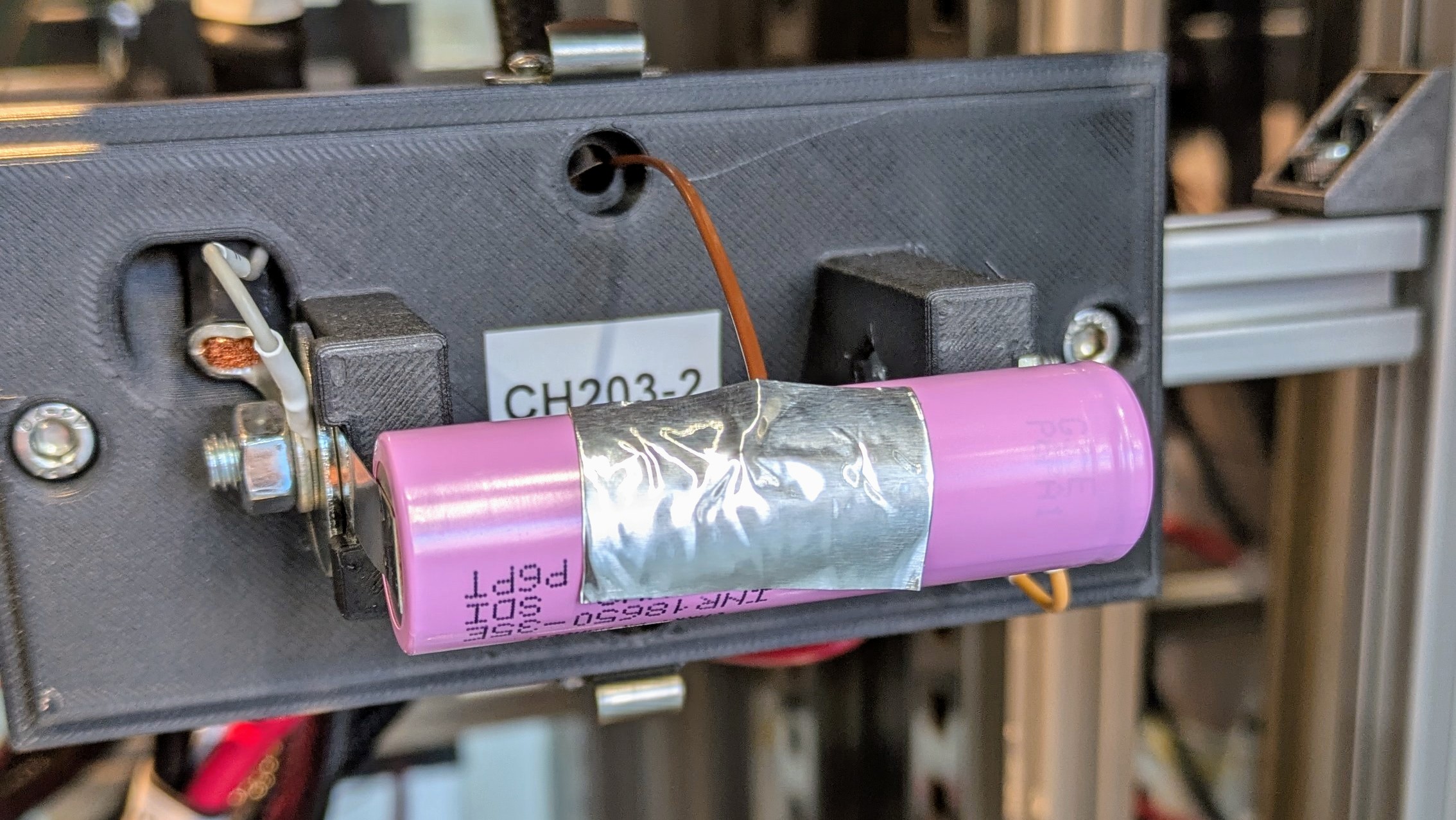
As part of my bachelor’s degree, my co-student Cecilie Chakram Nybru and I investigated a newly discovered aging mechanism in lithium-ion batteries, known as Electrolyte Motion Induced Salt Gradients (EMSI). We successfully confirmed that this mechanism also occurs in commercial cylindrical cells.
EMSI describes how the movement of electrolyte during charge and discharge cycles leads to uneven salt distribution inside the cell. This imbalance accelerates degradation over time. Its presence in common cylindrical cells had not been verified before our study.
Our project aimed to detect this effect using a novel low cost method based on simple conductivity measurements, avoiding the need for complex or expensive lab setups. We cycled the cells under different C rates (charge and discharge rates) to study how the effect develops under various conditions. Although some of the long term tests could not be completed within the project timeframe, the data we gathered was crucial for identifying clear trends. My task in this student research job was to gather and analyze the final data from our testing.
The results I obtained showed the same overall trends that Cecilie and I observed during our bachelor project: the severity of the salt gradient increases with higher charge rates, but eventually plateaus instead of growing indefinitely. This consistency reinforces that EMSI is a relevant aging factor in real world batteries and strengthens the foundation for continued research on the topic.