
Mapping Religion in the Global Anglophone Novel, 1890-1980 (MaRGAN) sounded quite intimidating when I first heard about it. Yet, being a second-year Master’s student in English Literature, it was almost a dream come true when one of our teachers, Professor Jamie Callison, mentioned the possibility of working on this research project to me and I said yes, without a second thought or any idea of what the project was about. And boy, am I glad I did- working on this project has turned out to be one of the most rewarding experiences I have had at UiA. Getting to work on a research project, that too related to literature, and getting to collaborate, discuss ideas and doubts and work with two classmates, all under the supervision of Professor Callison, made this a really fun, interesting and learning experience.
MaRGAN is a global research project with the University of Agder (UiA) being one of the many Universities contributing to it. The project basically aims to create a database that can be used by historians of religion, literary scholars or sociologists who want to study the changing attitudes towards religion and its representation in literature through the twentieth century and beyond. To do this, the project aims to define a corpus of approximately 400 global anglophone novels (published between 1890-1980), and categorise their engagement with religion in terms of one or more pre-defined religious keywords. So, our work is to help with this categorisation- each of the novels must be assigned the appropriate keywords that best describe it, with each keyword being accompanied by a short, approximately 150-word explanation of why that keyword is important to the novel.
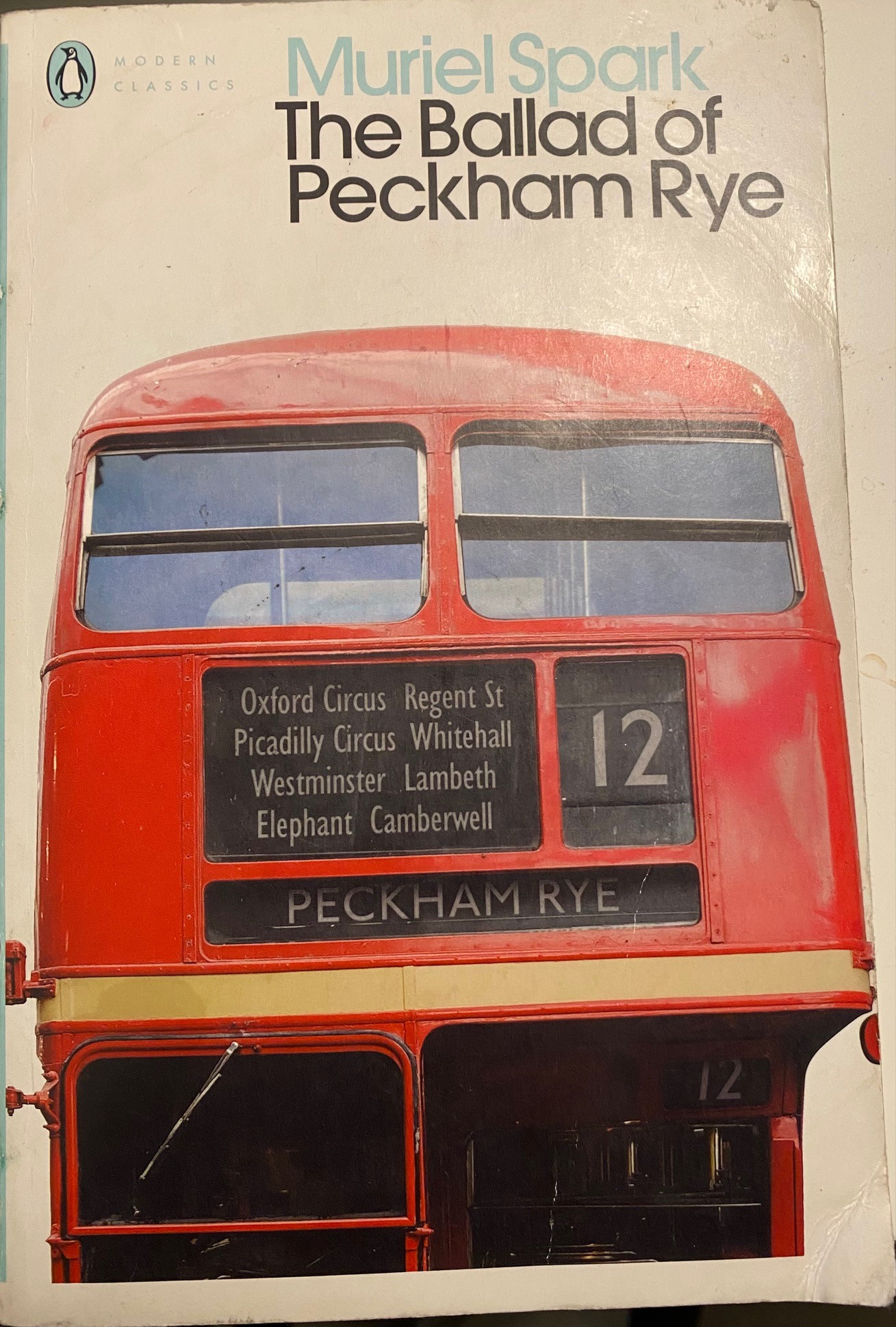
For instance, my job was to categorise two novels, Muriel Spark’s The Ballad of Peckham Rye (Published 1960) and Mulk Raj Anand’s The Untouchable (Published 1935). To do this, I was given a list of 32 pre-defined religious keywords, from which I had to choose those keywords that applied to The Ballad of Peckham Rye (TBPR). I chose the keywords ‘Critique’, ‘Enchantment’, ‘Community’, ‘Ethics’ and ‘Supernatural’ as the keywords that were essential to understanding TBPR. For each of the keywords I chose I also had to write a 150-word explanation of why and how that keyword was important to understanding the novel. This is the kind of indexing that should help future researchers quickly pull up which religious themes have been covered in a novel or to search by a keyword such as ‘Critique’ to quickly pull up all novels from the corpus which featured a critique of religion.
Apart from the religious keywords, we also had to categorise the works according to pre-defined codes for the religions and countries that influenced their work as well as the religions and countries featured in the novel. This would also allow the researchers to plot maps and visually depict the changing representations of religion in novels over time or the contrasting attitudes towards religion and its depiction in literature in different parts of the world.
Like everything else this project also featured a bit of a learning curve. When I was working on my first novel (TBPR), there was quite a bit of confusion over which keywords applied. Since TBPR is a novel that features a critique of a secular society there were many different keywords that seemed to apply at least to some extent. The challenge was where to draw the line, and after discussion with my fellow research mates, we developed a thumb rule of restricting ourselves to a maximum of five keywords. Having this as an upper limit forced us to focus on only the most important five keywords, bringing an enforced discipline to our process.
When I was working on the first novel, meeting and discussing doubts and suggestions with the other team members also helped. The other project members also reviewed and critiqued my work, just as I did theirs. And thanks to Andreas and Christer, the final document I sent to Professor Callison was much improved. Our meeting was also very helpful as we came up with a few suggestions, such as the suggestion to limit the main keywords to an upper limit of five as a way of enforcing discipline on the process, or the suggestion to also include a larger list of minor keywords that might apply to a work in addition to the main keywords submitted. All of this we passed on to Professor Callison during our review call. Following these discussions and based on our learnings, categorising the second novel The Untouchable proved to be a much easier process.
In summary, this has a been a rewarding, exciting, learning process for me. This is just the start of the MaRGAN project, and there is much work to be done yet. I hope I, or other students at UiA get a chance to follow this project through to its conclusion and that I can, in a few years, see this database in action, or better still, use it for my own research 😊.