
The aim of this research project was to identify relevant physical parameters for a robot that combines wheeled movement and quadrotor flight. The work focused on collecting experimental data to improve the robot’s simulation model in MATLAB, Simulink and Simscape.
Initial measurements covered mass and wheel geometry, including track width and wheelbase. The effective wheel radius was determined by rolling the robot under its own weight through a known number of wheel revolutions and measuring the distance travelled.
Preliminary friction tests were carried out on the laboratory floor using a motor to pull the robot with a set force. The tests explored static friction, sliding friction and rolling resistance.
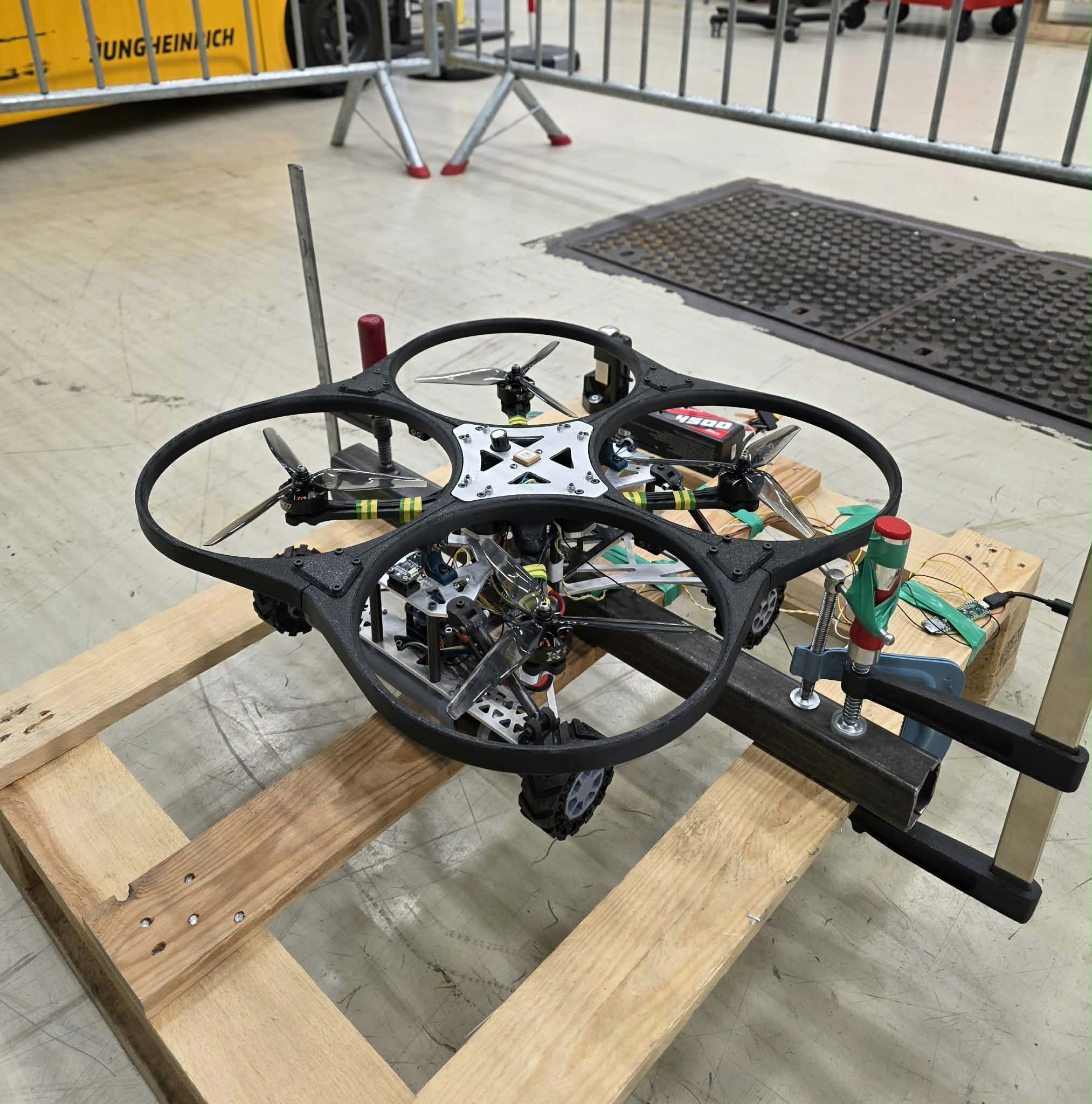
To investigate the propulsion system, we built a test rig that holds the robot in place while its rotors operate. A 3D-printed bracket connected the robot to a load cell, which measures the combined upward force from all four rotors. The load cell was calibrated using known weights before testing.
A separate Teensy microcontroller was programmed to collect the force measurements alongside data from the flight controller. The recorded signals included individual motor speeds and commands, radio throttle input, battery voltage, total battery current and flight-controller temperature. A live dashboard displayed the signals during testing, and the data were saved for later analysis.
By varying the motor commands, we investigated how rotor speed, thrust and electrical demand changed together. The measurements were used to estimate a preliminary thrust coefficient describing the relationship between rotor speed and the force generated. Recording battery voltage also helped document the operating conditions, since voltage drops under load affect comparisons between tests and manufacturer data.
The measured parameters will be used to update the robot’s simulation model with values obtained from the physical platform. The recorded data also provide a basis for comparing simulated and measured behaviour, helping assess the accuracy of the models and identify where further measurements are needed.